


-
- Location: Buffa, Pelion
- Size: 193 sq.m
- Status: Completed
- Year: 2024
- Photographer: Nickolas Chryssos
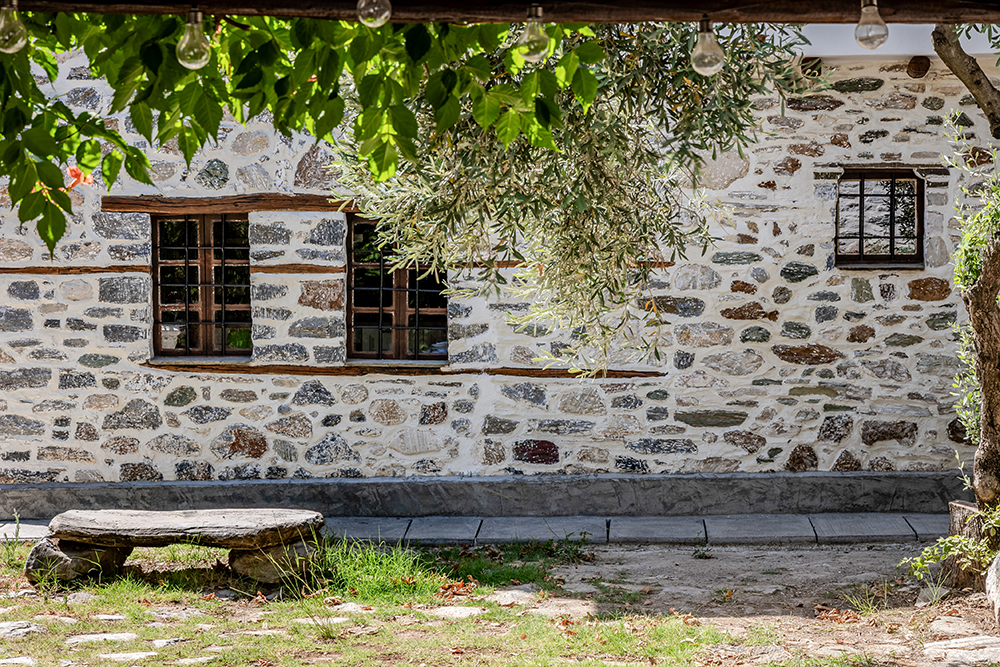
The client, having inherited the estate, sought to restore the buildings with a minimal budget while preserving their original character. The design approach focused on careful repair and selective intervention, respecting the existing architectural identity.
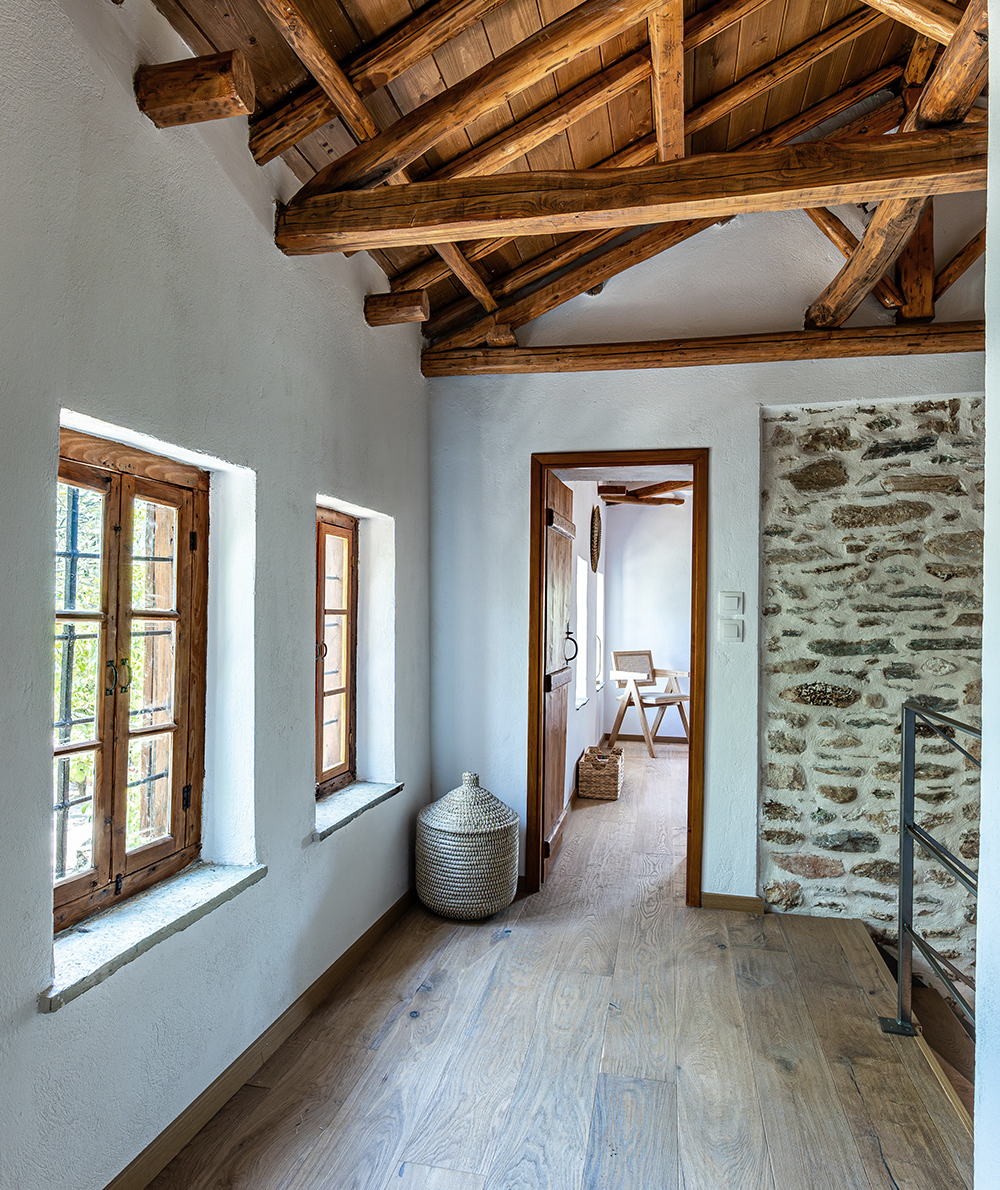
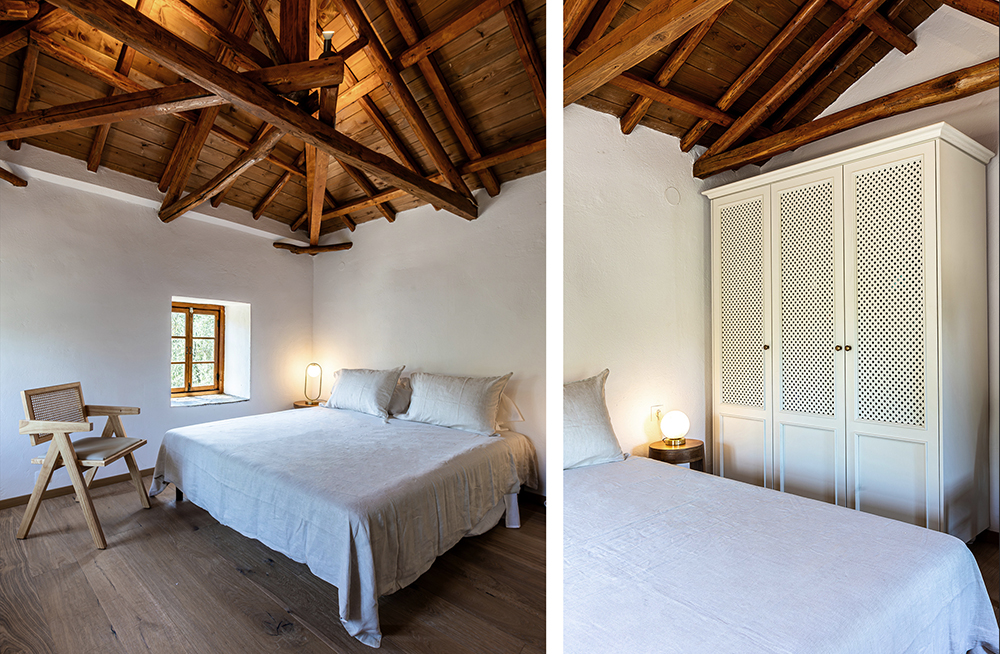
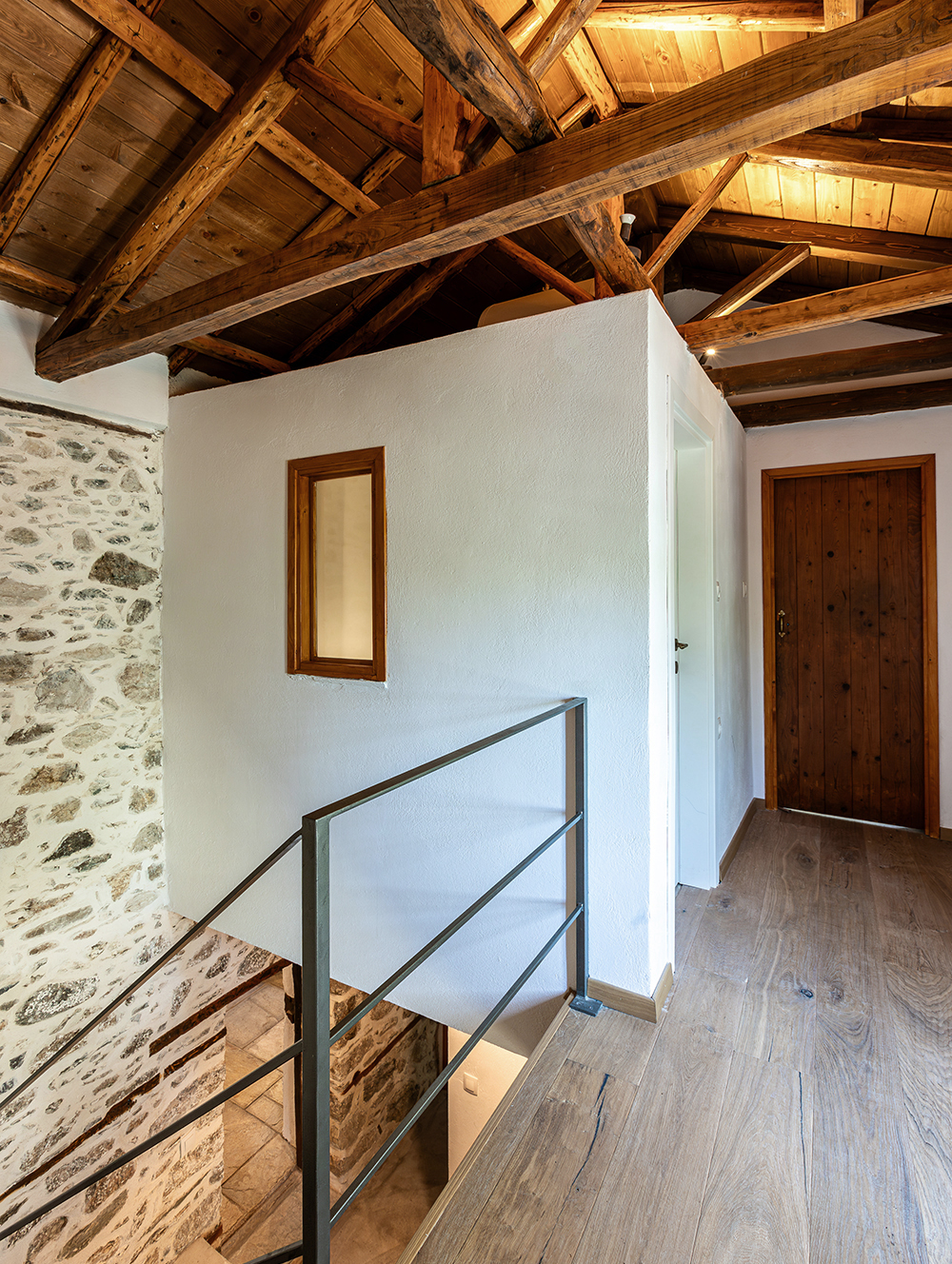
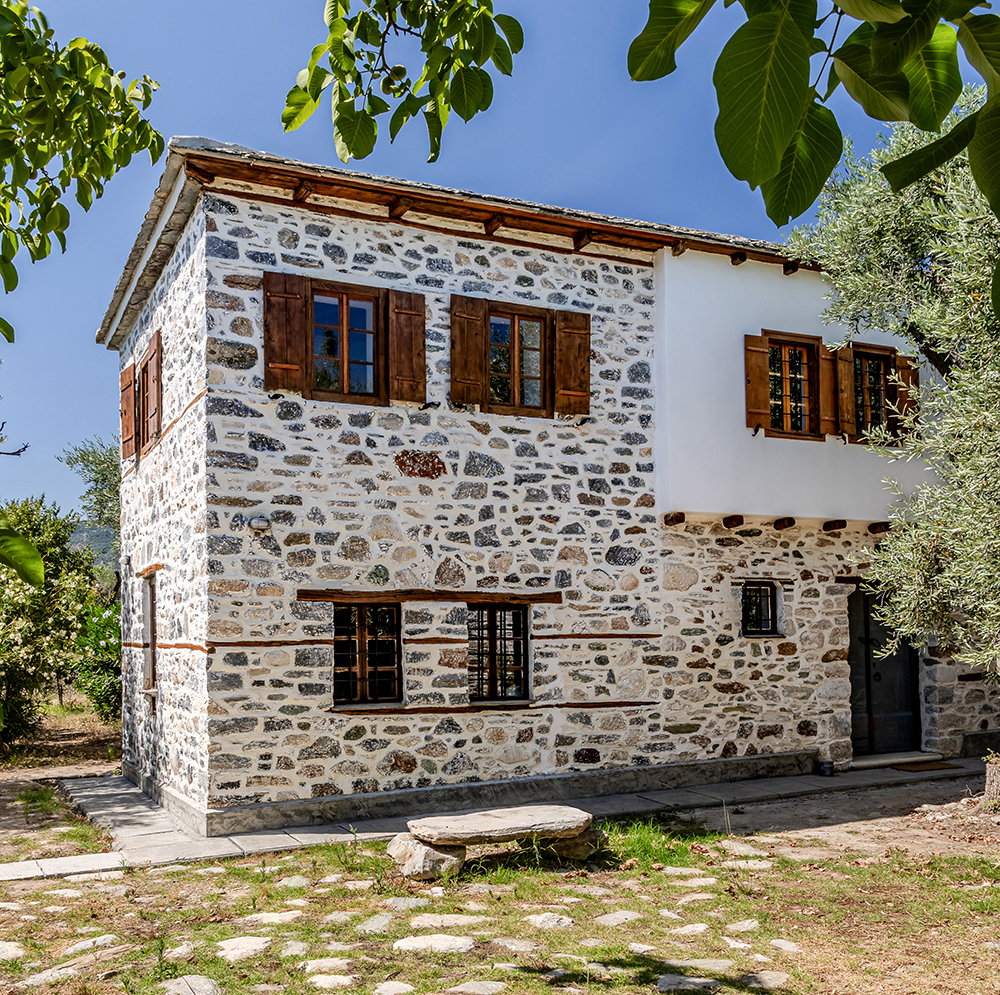
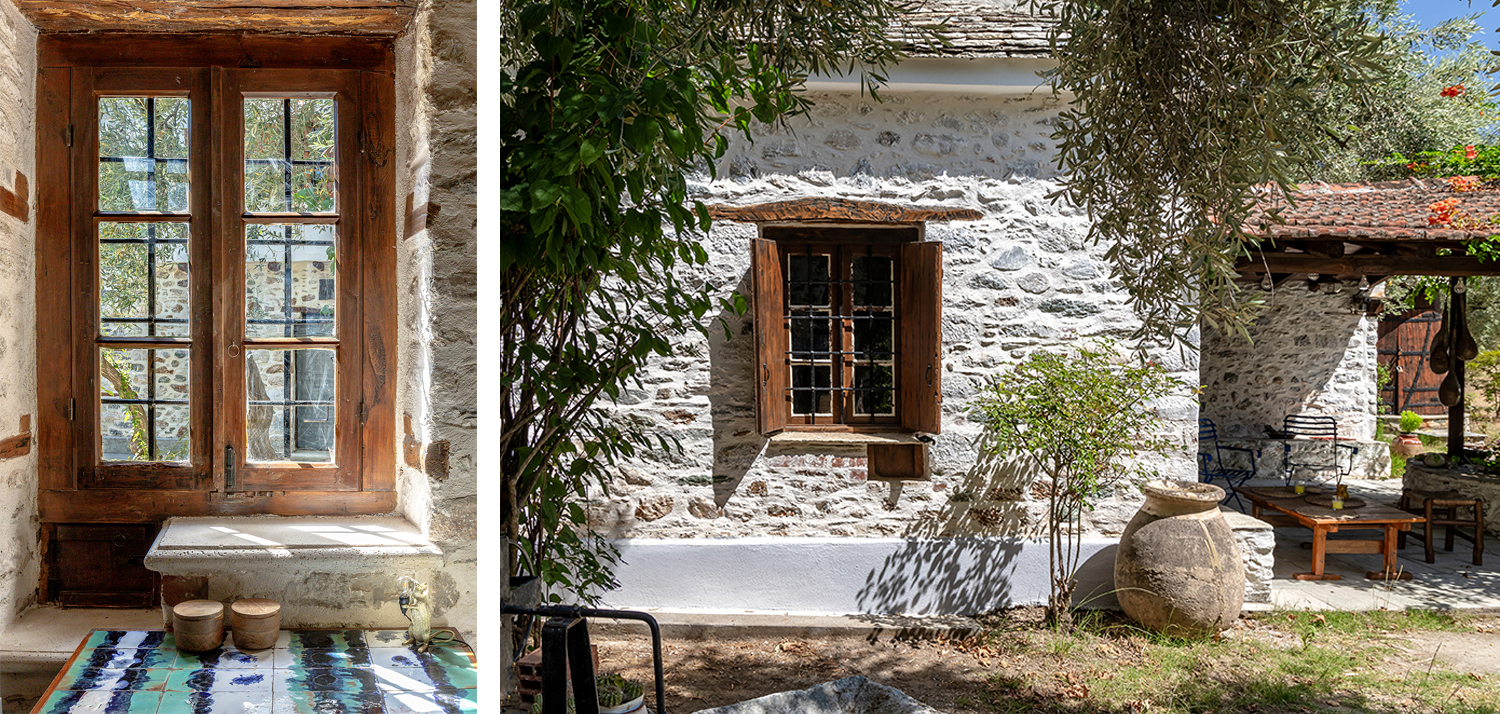
The first priority was the structural rehabilitation of the stone shells, using compatible contemporary materials and techniques. The timber roofs were repaired or reconstructed where necessary; replacing deteriorated wooden elements and roof tiles. In order to reduce costs, all existing window and door frames were retained, while the electrical and plumbing installations were upgraded where required.
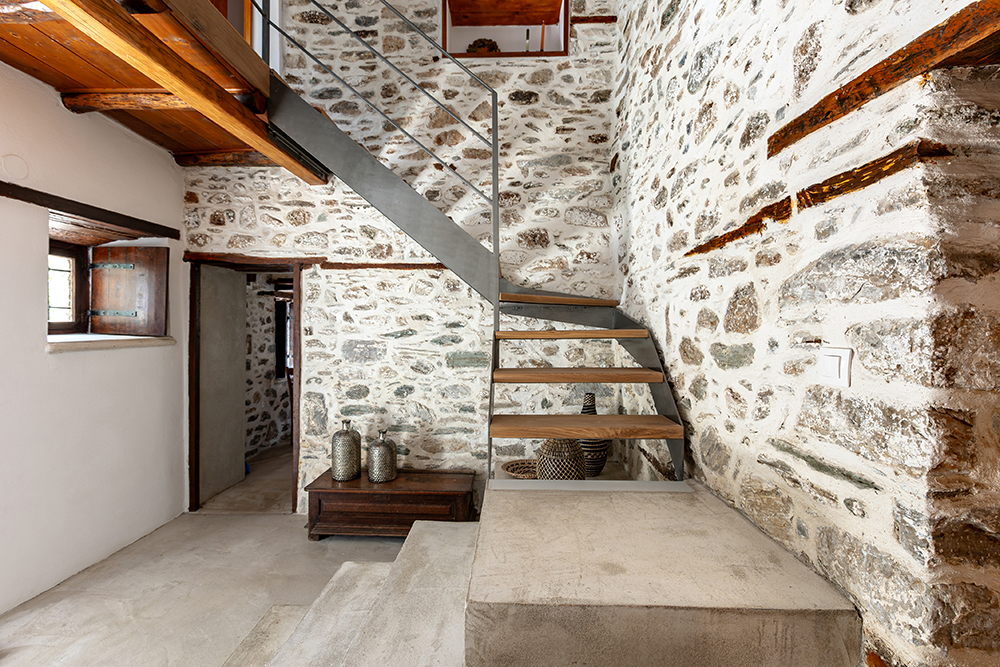
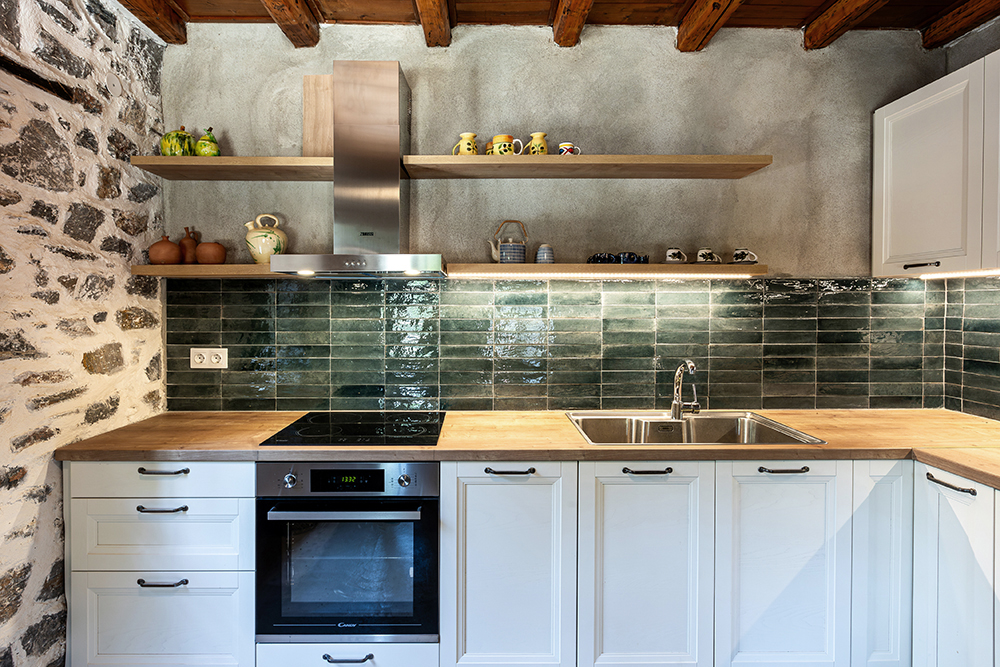
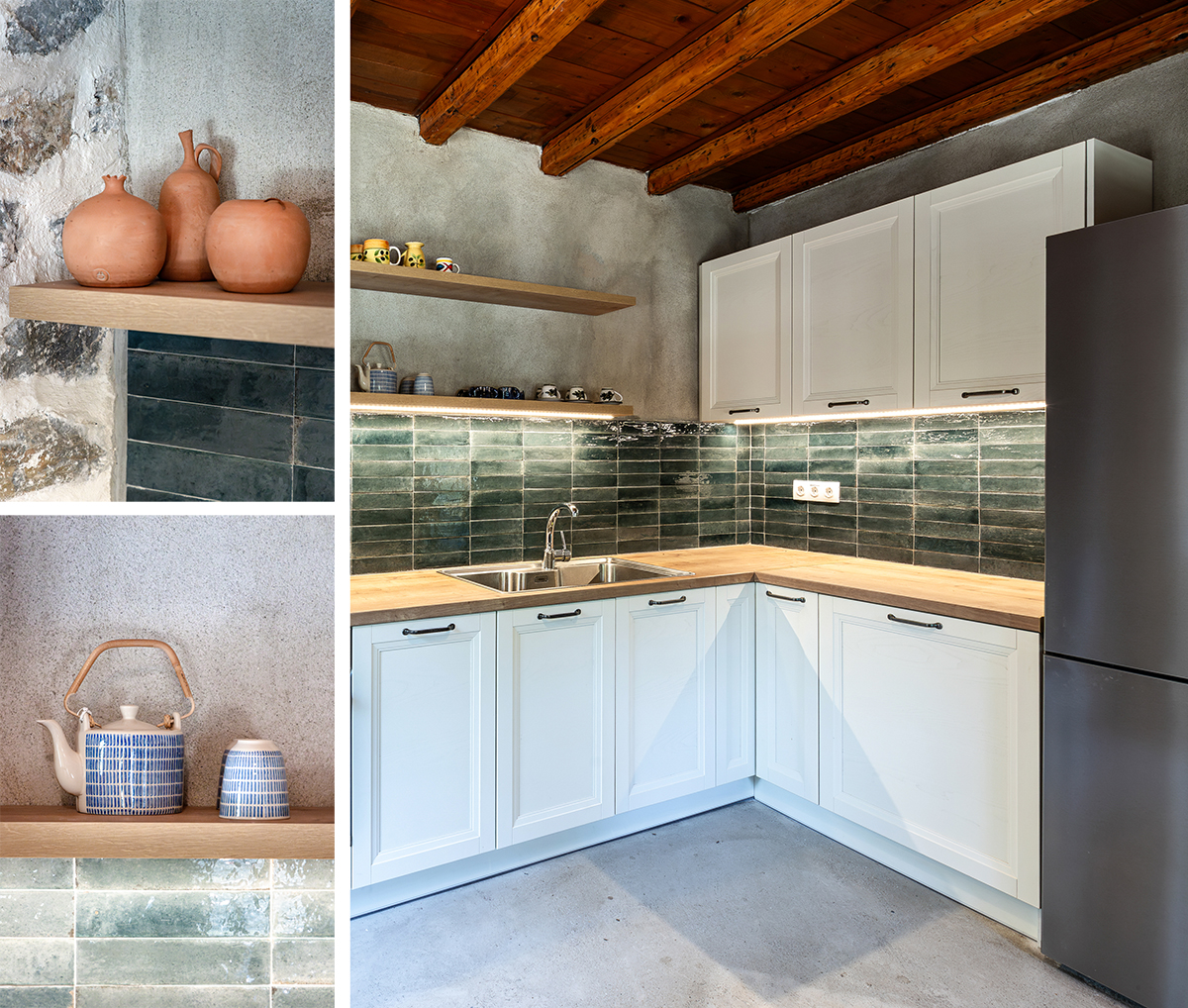
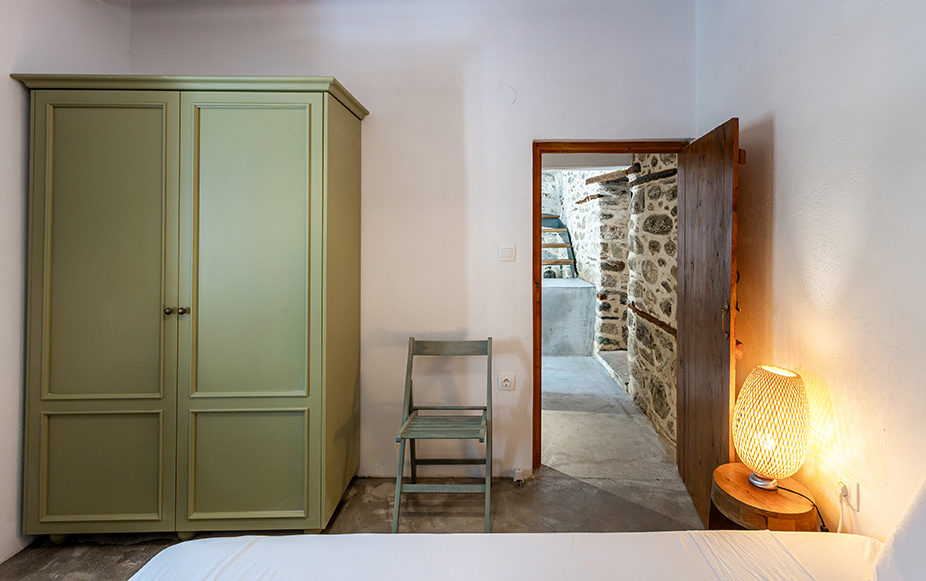
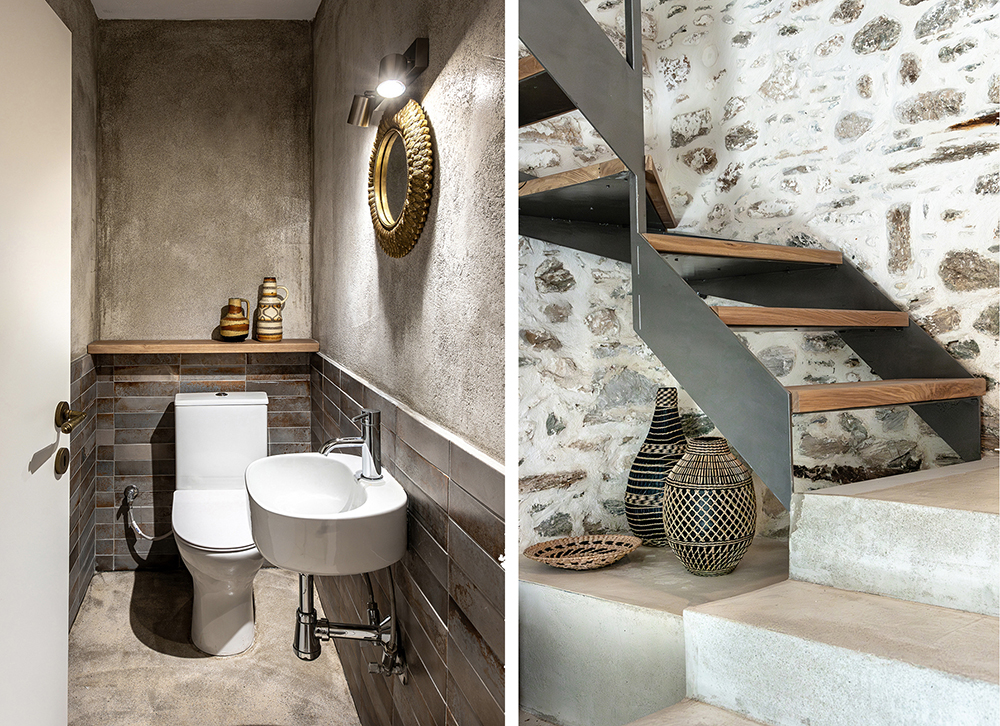
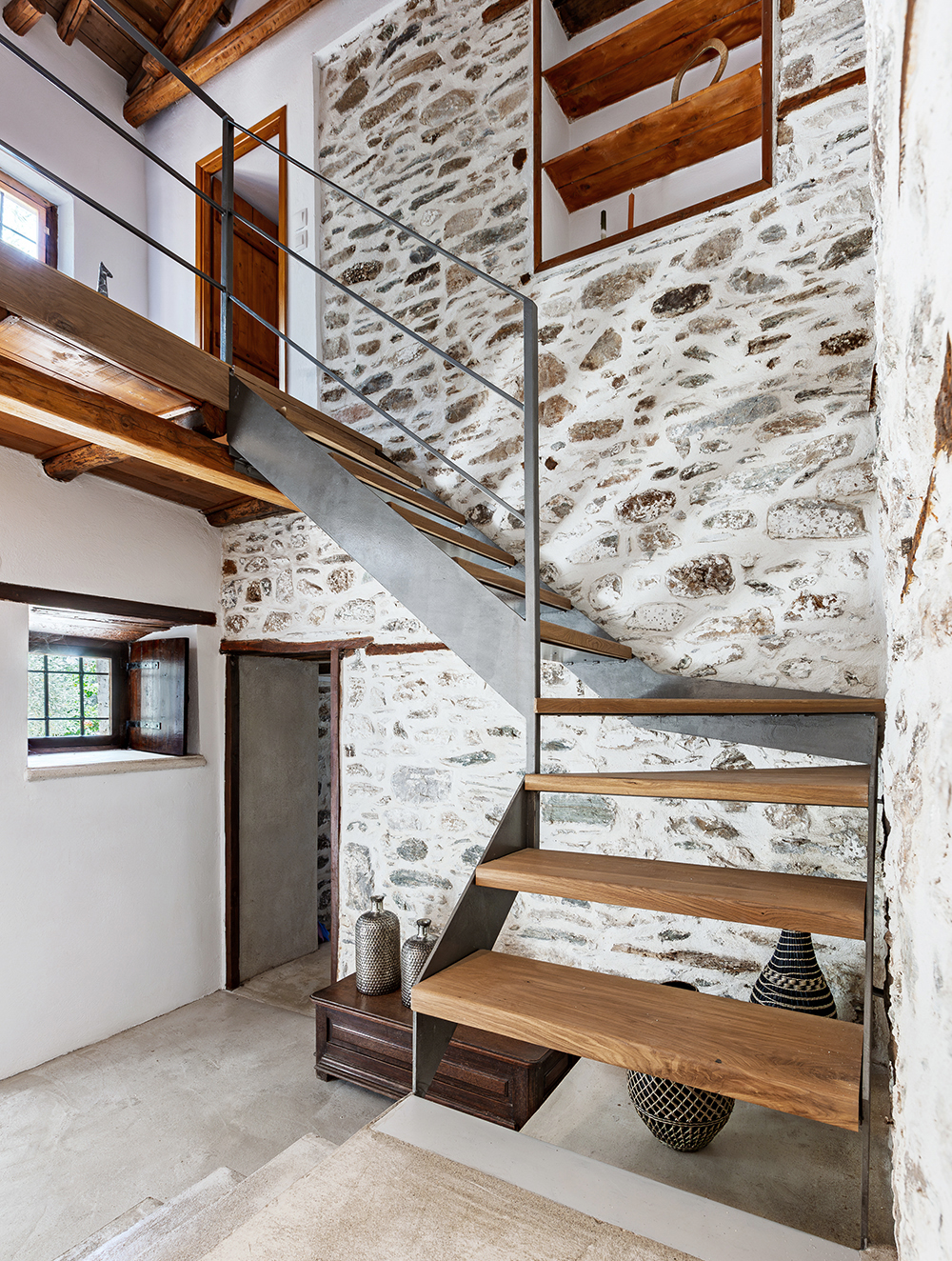
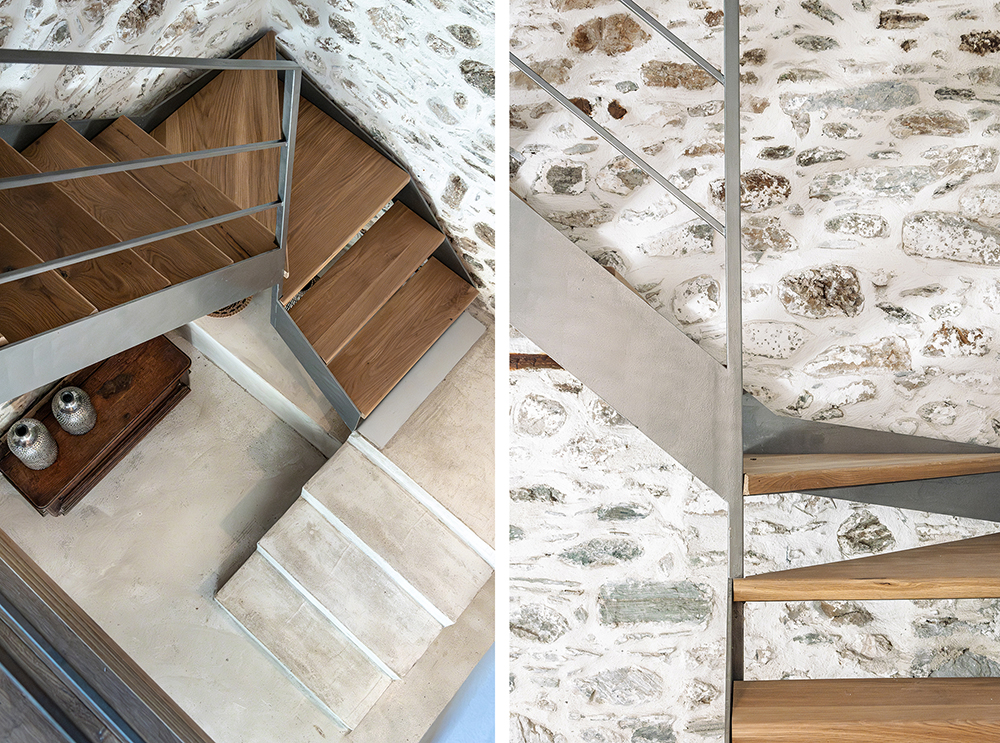
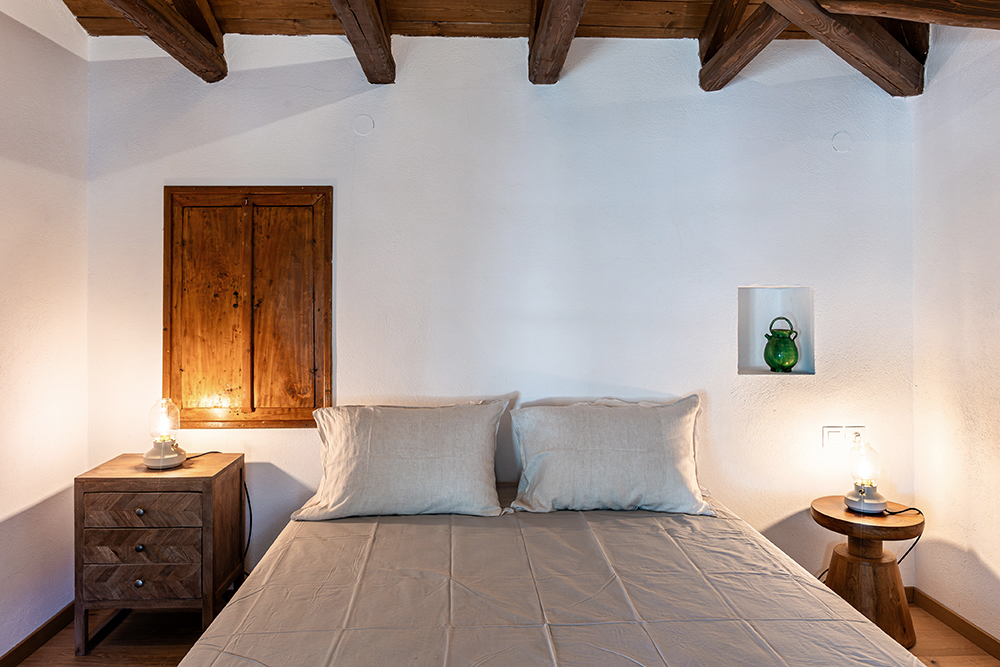
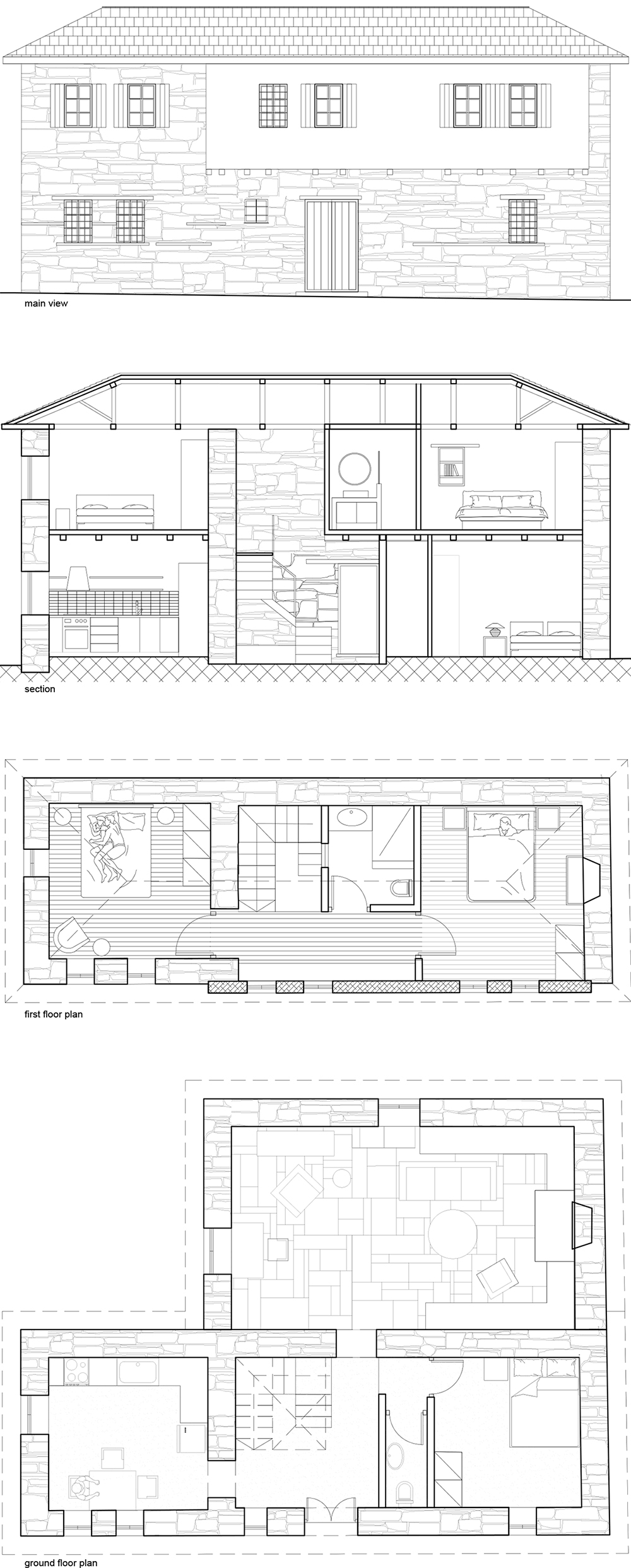
The main house, with a total area of 168 sq.m., was reorganized to improve functionality. The ground floor accommodates the living room, kitchen, guest room, and a WC, while the first floor contains two bedrooms and a bathroom. The internal layout was modified by relocating the staircase to the entrance, optimizing circulation and freeing usable space. Two new bathrooms were introduced to meet contemporary needs; the upper-level bathroom was constructed in reinforced concrete, contributing to the structural reinforcement of the existing stone shell.
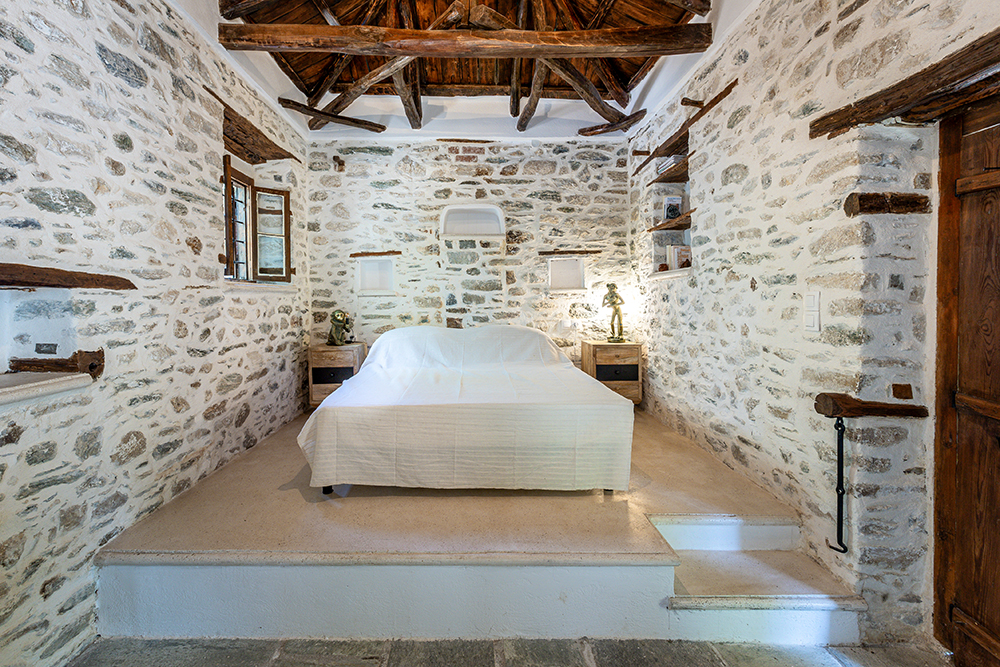
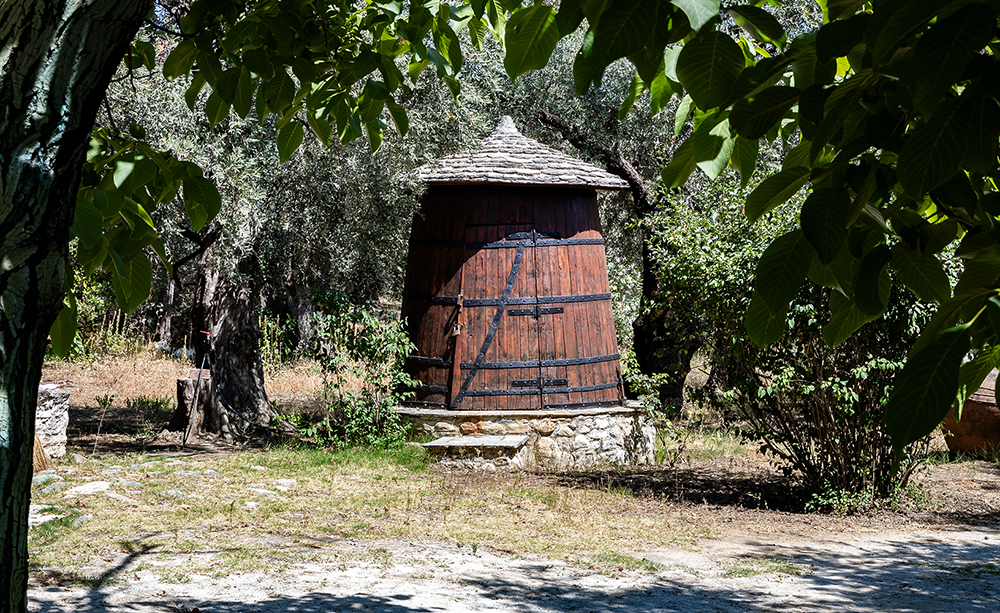
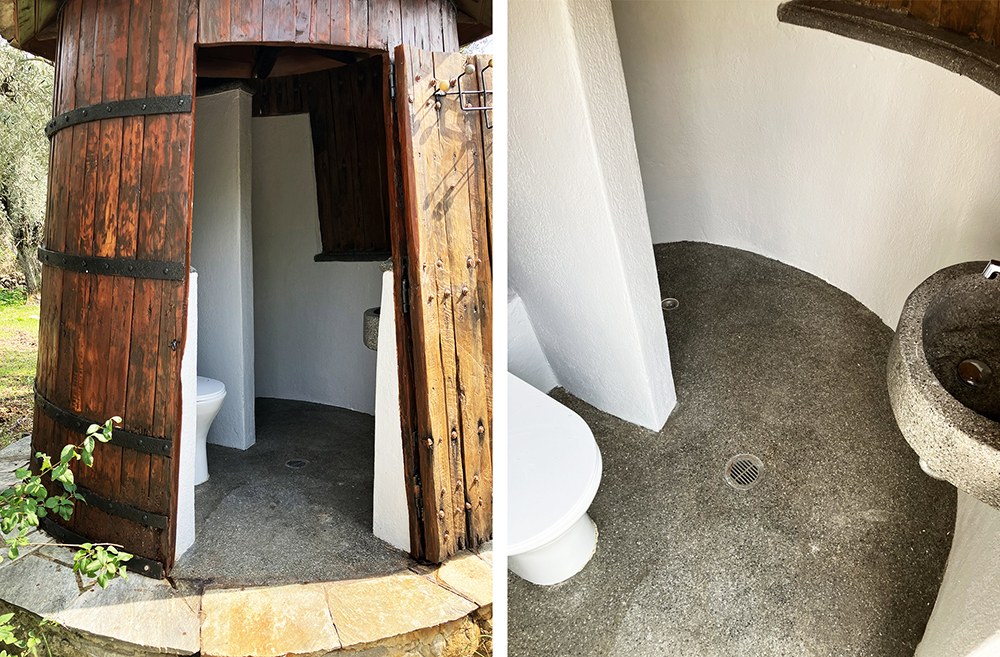
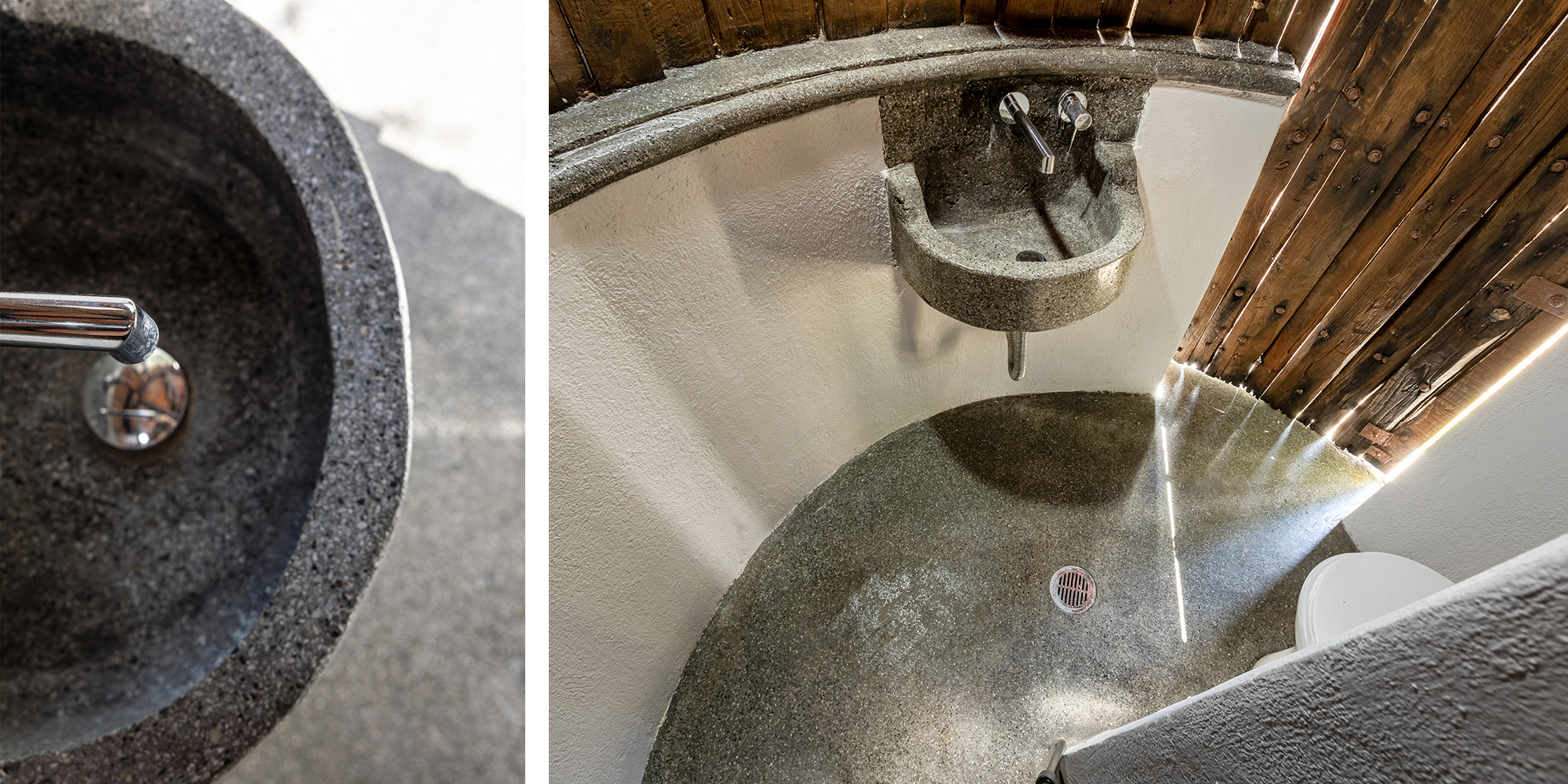
The secondary building, measuring 25 sq.m., was renovated and converted into an independent guesthouse, complemented by an external bathroom. This outdoor bathroom was designed by reinterpreting an existing wooden barrel once used for olive storage, forming a compact, spiral-plan space that connects memory and new use.
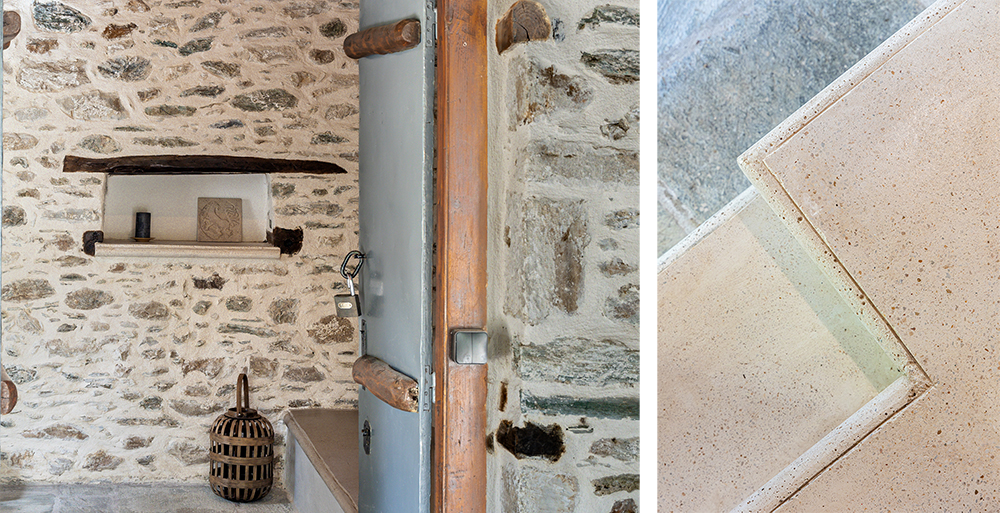
Material choices reinforce the dialogue between tradition and intervention. Cement mortar was applied in wet areas and on the ground floor, while timber flooring was used on the upper level. During the restoration process, selected areas of plaster were removed both externally and internally, allowing the original stone masonry to remain visible and highlighting the authenticity of the construction. This approach aligns with the broader tradition of Greek vernacular architecture, where stone and wood are the dominant materials and form the identity of rural buildings